








Entertainment Software Rating Board    


Frequently Asked Questions

About the ESRB


About ESRB Ratings


About the Rating Process


About the Effectiveness of ESRB Ratings


About the ESRB and Retailers


About the ESRB

What is the ESRB?

The Entertainment Software Rating Board (ESRB) is a non-profit, self-regulatory body established in 1994 by the Entertainment Software Association (ESA), formerly known as the Interactive Digital Software Association (IDSA). ESRB assigns computer and video game content ratings, enforces industry-adopted advertising guidelines and helps ensure responsible online privacy practices for the interactive entertainment software industry.


Are all games required to have a rating?

The rating system is voluntary, although virtually all games that are sold at retail in the U.S. and Canada are rated by the ESRB. Many retailers, including most major chains, have policies to only stock or sell games that carry an ESRB rating, and most console manufacturers will only permit games that have been rated by ESRB to be published for their platforms.


How many games does the ESRB rate?

The ESRB typically assigns over 1,000 ratings per year. In 2007, ESRB completed 1,563 rating assignments. For a breakdown of ratings by category, click here.


Does the ESRB have any restrictions on how a game can be marketed?

Publishers of games carrying an ESRB rating are legally bound to follow the industry-adopted Principles and Guidelines for Responsible Advertising Practices along with numerous requirements addressing how ratings information must be displayed on game packaging and in advertising, as well as restrictions on where ads for M-rated games may appear. The ESRB's Advertising Review Council (ARC) diligently monitors industry compliance, and in the event that a game publisher is found to have inappropriately labeled or advertised a product, the ESRB is empowered to compel corrective actions and impose a wide range of sanctions, including monetary fines where and when appropriate.


What else can parents do to get help with video game purchase decisions?

ESRB ratings are an excellent source for guidance and information about game content, but we also encourage parents to go beyond the ratings and do their own research about the games they or their children are considering for purchase or rental. For helpful parent tips and resources, click here.


Who can I contact if I have a question or complaint about a rating?

The ESRB welcomes feedback. Use the Contact ESRB form to submit complaints, comments, questions or concerns regarding ESRB ratings.


Back to Top


About ESRB Ratings

How was the rating system created?

After consulting a wide range of child development and academic experts, analyzing other rating systems and conducting nationwide research with parents, the ESRB found that what parents really wanted from a video game rating system were both age-based categories and, equally if not more importantly, concise and impartial information about what type of content is in the game. Parents agreed that a rating system should inform and suggest, not prohibit, and that the rating system should not attempt to quantify objectionable incidents, but rather should reflect the overall content of the game. It was with these considerations in mind that the ESRB created its system for rating computer and video game content. Over the years, ESRB has enhanced or updated the rating system to make it more understandable, useful and effective.


Why not just use the same rating system as the movies?

The two-part ESRB system was developed amid consumer demand for more detailed information than that which had previously been provided through other rating systems. Over 30 different content descriptors are used to indicate elements in a game that may have triggered a particular rating and/or may be of interest or concern, and are as helpful and important as the six age-based rating categories. As evidenced by both ESRB-commissioned consumer research as well as that conducted by the Federal Trade Commission (FTC), the vast majority of parents are now aware of and regularly using the ESRB ratings. In fact, in a study by the Kaiser Family Foundation about parental views of media rating systems for television, films, music and video games, 58% of parents said they consider the ESRB rating system to be “very useful” (the highest percentage among the various rating systems), and 91% found ESRB ratings to be either “very useful” or “somewhat useful.” Given these high levels of awareness, use and satisfaction with the ESRB rating system, it would not be sensible or practical to switch to a different system.


Do the ratings indicate if a game is good or bad?

ESRB ratings provide guidance about a game's content, not its quality. Ratings are designed to give consumers concise and impartial information about a game's content and age suitability so that they can make informed purchase decisions.


How can I find and use the ratings to determine if a game is right for my family?

The ESRB ratings were developed to serve as a guide to help consumers make informed decisions about which games might be appropriate for their children and family. The system has two equally important parts:


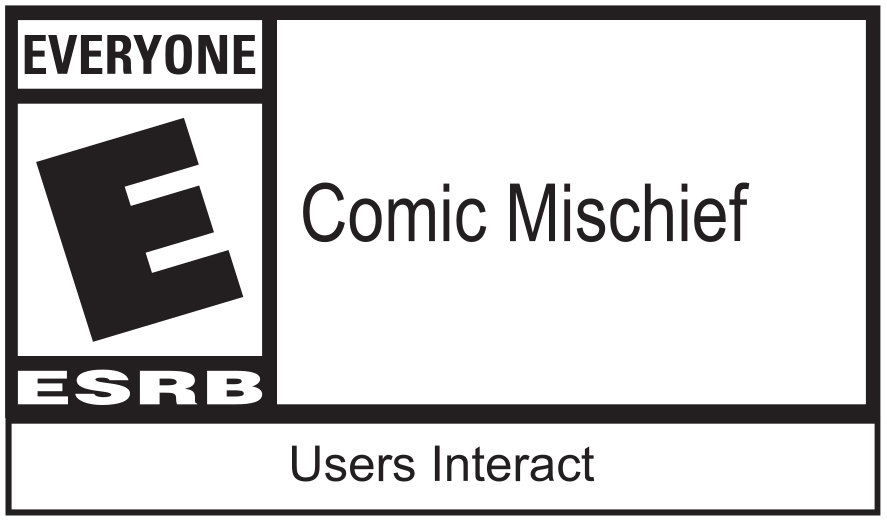
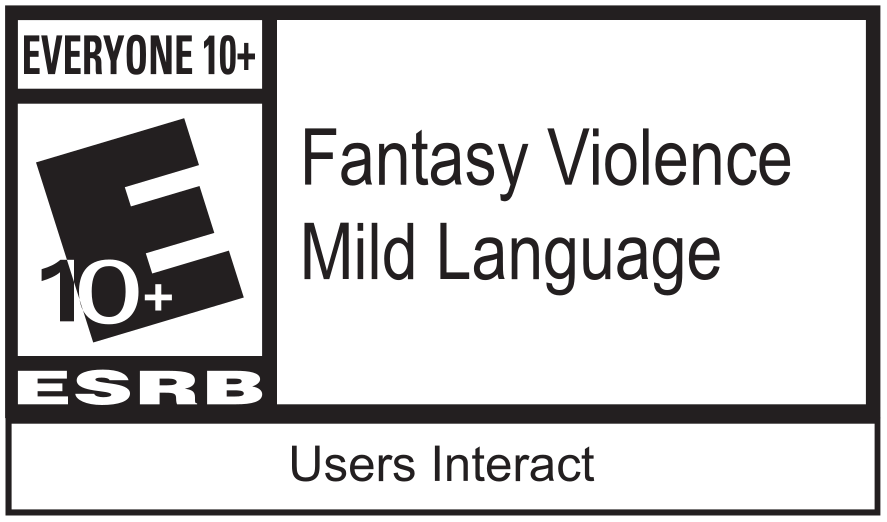
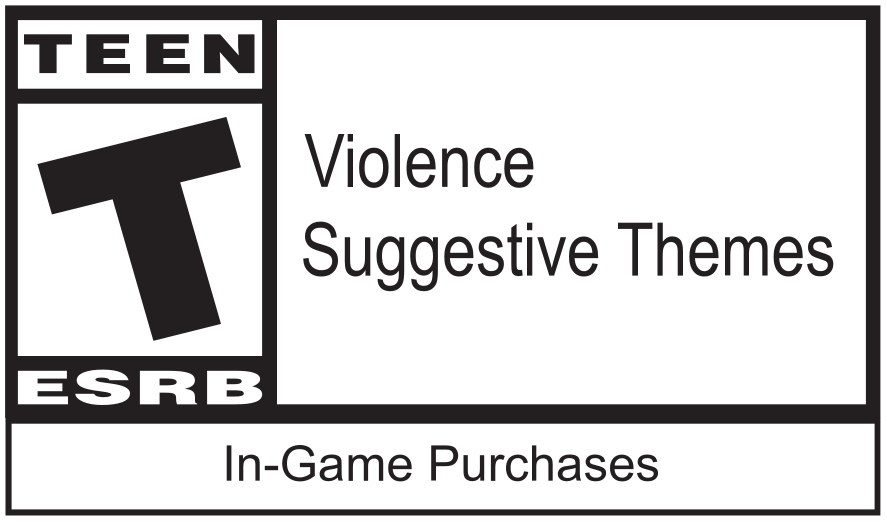
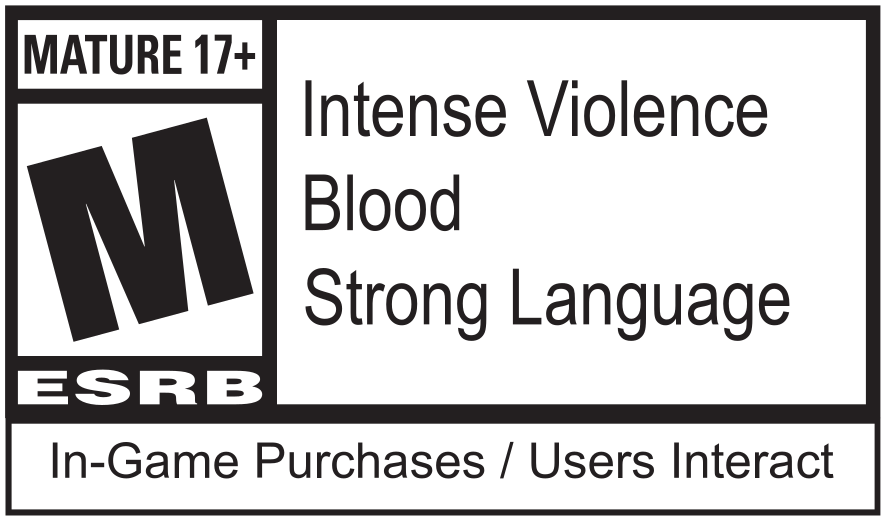
Clearly displayed on the front of virtually every computer and video game box sold in the United States and Canada, you will find an ESRB rating symbol that suggests age appropriateness for the game. On the back of the box are content descriptors which are assigned within the context of the rating category, and which indicate elements in the game that may have triggered a particular rating and/or may be of interest or concern.


To find the ESRB rating for a game, you may use the search tool on the home page of ESRB's website, which allows you to search by title, rating, content descriptor, publisher and platform.


How many different rating categories and content descriptors are there? What do they mean?

There are currently six ESRB rating categories:


There are over 30 different content descriptors that refer to potentially inappropriate content such as violence, sex, language, controlled substances and gambling, among others.


Click here for a complete list of ESRB rating categories and content descriptors with definitions.


Do content descriptors list all of the different content found in a game?

Content descriptors provide an additional tool which consumers may use to help them determine if a game is appropriate for members of their family; however they are not intended to be a listing of every type of content one might encounter in the course of playing a game. They are applied within the context of the game's overall content and the rating category assigned, and are there to provide consumers with additional information about elements in a game that may have triggered a particular rating and/or may be of interest or concern relative to the age appropriateness of the rating category assigned.


As such, the absence of a content descriptor may not necessarily mean the total absence of such content, and a given content descriptor may not always refer to precisely the same type or intensity of material depending on the rating category that accompanies it. For instance, Suggestive Themes in an E10+ game may refer to a flirtatious remark whereas in a Teen game it may refer to provocative clothing on a female character.


We encourage parents to consult other resources if they desire greater depth and specificity regarding game content.


What does it mean when a content descriptor says "Mild," like "Mild Violence" or "Mild Lyrics?"

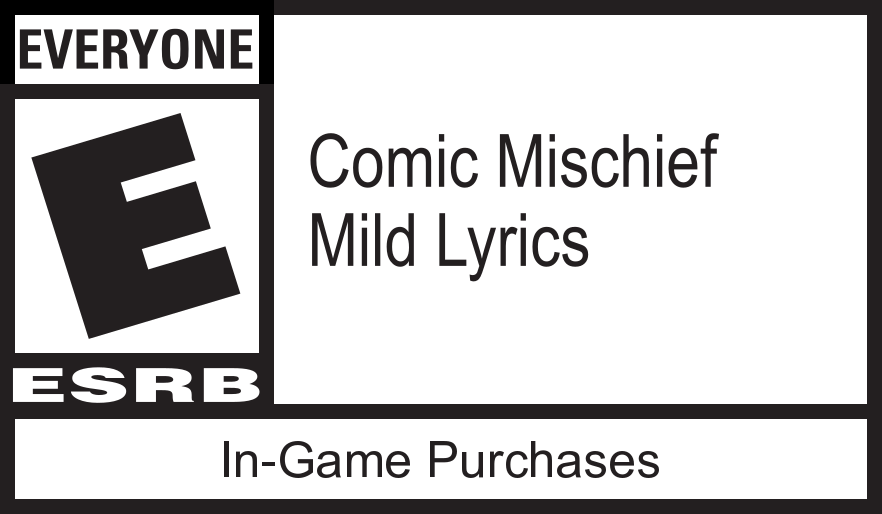
When a content descriptor is preceded by the term "Mild," it is intended to convey low frequency, intensity or severity of the content it modifies. Many ESRB content descriptors can be modified by the term "Mild" to give consumers a sense of the type of content that either contributed to the rating assigned or just might be of interest or concern.


What does the "Rating Pending" symbol mean?

The "Rating Pending" symbol is only for use in advertising and marketing materials released prior to the assignment of an ESRB rating. Publishers will sometimes place advertisements for a game prior to it having been rated, and in these circumstances they may use the "Rating Pending" symbol in advertisements for that game until a rating has been assigned. Once a rating has been assigned, however, all ads placed thereafter must carry the ESRB rating. A game never actually ships to stores with a "Rating Pending" symbol on the box; all final product released must display the rating assigned by the ESRB, and consumers are encouraged to check www.esrb.org for updated ratings information.


Do ESRB ratings address player chat or player-generated content in online-enabled games?

ESRB ratings only address content created by the publisher, and cannot consider content that is created or introduced by individual players when playing the game online.  ESRB-rated games that can be played online with other players and which enable exposure to user-generated content are required to display an Online Rating Notice on the game's packaging (if it exists), as well as in the opening screen. The Online Rating Notice states: "Online Interactions Not Rated By The ESRB." This notice is intended to warn about possible exposure to chat (text, audio, video) or other types of user-generated content (e.g., maps, skins) that have not been considered in the ESRB rating assignment.


Back to Top


About the Rating Process

Who decides which rating a game should get?

Each ESRB rating is based on the consensus of at least three specially trained raters who view content based on numerous criteria. Raters must be adults, and typically have experience with children through prior work experience, education or by being parents or caregivers themselves. They rate games on a full-time basis, although they may be assisted by part-time raters when necessary. While they are not required to have advanced skills as computer and video game players (since their job is to review content and determine its age-appropriateness, not to assess how challenging or entertaining a particular game is to play), they do gain or further develop these abilities since they are also required, time-permitting, to play the final version of games (after their release) when they are not busy assigning ratings. To eliminate the risk of outside or industry influence, the identities of ESRB raters are kept confidential, and they are not permitted to have any ties to or connections with any individuals or entities in the computer/video game industry.


What are the criteria for rating video games?

ESRB raters are trained to consider a wide range of pertinent content and other elements in assigning a rating. Pertinent content is any content that accurately reflects both:

  • the most extreme content of the final product - in terms of relevant rating criteria such as violence, language, sexuality, gambling, and alcohol, tobacco and drug reference or use; and
  • the final product as a whole - demonstrating the game’s context (such as setting, storyline and objectives) and relative frequency of extreme content.

Due to the unique interactive characteristics of games, the ESRB rating system goes beyond other entertainment systems by also taking into account elements such as the reward system and the degree of player control.


How does the rating process work?

Prior to a game being released to the public, game publishers submit responses to a detailed, written questionnaire (often supplementing responses with lyric sheets, scripts, etc.) specifying exactly what pertinent content (as defined by ESRB) will be in their game. Along with the written submission materials, publishers must provide a videotape or DVD which captures all pertinent content, including the most extreme instances, across all relevant categories, including but not limited to violence, language, sex, controlled substances and gambling. Pertinent content that is not playable (i.e., "locked-out") but will exist in the code on the final game disc must also be disclosed.


Once the submission is checked by ESRB for completeness, which may also involve ESRB staff members playing a beta or alpha version of the game, the video footage is reviewed by at least three specially trained game raters. ESRB raters must be adults and typically have experience with children through prior work experience, education or by being parents or caregivers themselves.


Upon reviewing the video or DVD of all pertinent content in a particular game, each rater recommends an appropriate rating category and content descriptors. However, this initial recommendation is merely intended as a starting point from which the raters will collectively deliberate about what rating should be assigned to the game. During deliberation, submissions for similar games previously rated by ESRB may be reviewed so raters can take into account parity and precedent for the product being evaluated. Raters will then further discuss the game until they reach consensus on a final recommendation. ESRB staff will review the final rating recommendation and rater feedback, conduct a parity examination where appropriate to maintain consistency in rating assignments, and issue a certificate with the official rating assignment to the game's publisher. The publisher may either accept the rating as final or revise the game's content and resubmit it to the ESRB, at which time the process starts anew. Publishers also have the ability to appeal an ESRB rating assignment to an Appeals Board made up of publishers, retailers and other professionals.


When the game is ready for release to the public, publishers must send copies of the final product to the ESRB. The game packaging is reviewed to make sure the rating information is displayed accurately and in accordance with ESRB requirements. Additionally, ESRB staff, including raters (time-permitting), play the final version of both hand-picked and randomly selected games to verify that all the materials provided by the game's publisher during the rating process were accurate and complete.


For more information about the ESRB Enforcement System, click here.


Why don’t the ESRB raters actually play the games they rate?

ESRB raters do not actually play the games during the rating process for many reasons. First, many games have upwards of 50 hours of gameplay, and requiring a minimum of three raters to play through each of the more than 1,000 games rated by ESRB each year would not only be inefficient given the high degree of repetition in video games, but would fail to ensure that they found and had the opportunity to consider all of the pertinent content in their assignment of a rating. However, when warranted, ESRB staff may play beta or alpha versions of games submitted for rating when the content disclosed in submission materials requires further clarification, or when a company requests that the ESRB make a video transfer of gameplay.


Because games are player-controlled, there are many different permutations of gameplay depending on the choices the player makes during the game. Therefore, one player of a particular game may see very different types of content than another depending on the choices he or she makes. As such, engaging in gameplay as a supplement to the current rating process, be it for 2 hours, 10 hours, or even more, would offer no greater assurance that all pertinent content is disclosed and considered in the assignment of a rating. That is why it is essential that publishers be required to disclose on videotape or DVD all pertinent content in the game they submit for rating, including the most extreme elements, so that raters can thoroughly assess the game and assign an appropriate rating.


Additionally, given the manufacturing and print advertising deadlines to which publishers must adhere (which can occur 60-90 days before a game ships), games must oftentimes be submitted to ESRB for rating before they have been finalized or fully tested. As a consequence, these games may be “buggy,” making it difficult, if not impossible, for a rater to play the game from start to finish.


Once a game has been released, ESRB staff, including raters (time-permitting), play the final versions of hand-picked and randomly selected games to verify that all the materials provided by the game's publisher during the rating process were accurate and complete and the rating is appropriate.


Back to Top

About the Effectiveness of ESRB Ratings

How effective is the rating system? Are parents using it?

According to a survey by Peter D. Hart Research Associates in March 2008, 86% of parents with children who play video games are aware of the rating system and 78% say they regularly check the rating before buying computer and video games for their children. Over half of parents are aware of content descriptors, which are found on the back of game packaging and indicate elements in a game that may have triggered a particular rating and/or may be of interest or concern.


The survey also found that 59% of parents say they “never” allow their kids to play M-rated games; an additional 35% say they “sometimes” allow their children to play M-rated games. Parents of children under the age of 13 are more than twice as likely as those with children 13 and older to “never” allow their children to play an M-rated game. When parents do allow their children to play M-rated games, they do so after checking the rating information, considering what's in the game and making a judgment about whether it may be appropriate for their children.


Do parents agree with the ratings and find them to be reliable and accurate?

The ESRB commissions consumer research to measure parental agreement with the ratings. According to a study conducted by Peter D. Hart Research Associates in November 2005, parents agreed with the ESRB ratings 82% of the time, while another 5% of the time the ratings were thought to be “too strict”. A recent study, published in April 2007 by the Federal Trade Commission (FTC), found that 87% of parents are "somewhat" to "very" satisfied with the ESRB ratings, and 64% agree with ratings "all," "nearly all" or "most of the time." In fact, in a study published in 2007 by the Kaiser Family Foundation about parental views of media rating systems for television, films, music and video games, 58% of parents said they consider the ESRB rating system to be “very useful” (the highest percentage among the various rating systems), and 91% found ESRB ratings to be either “very useful” or “somewhat useful.“


How is the rating system enforced?

As the game industry's self-regulatory body, ESRB is responsible for the enforcement of its rating system. Every publisher of a game rated by the ESRB is legally bound by contract to disclose all pertinent content when submitting the game for an ESRB rating, including content that may not be playable (i.e. “locked out”) but will exist in the code on the final game disc. After a game is released, ESRB staff, including raters (time-permitting), review and play-test the final version of both hand-picked and randomly selected games to verify that all pertinent content was fully disclosed. In the event of incomplete disclosure during the rating process that would have affected the assignment of a rating or content descriptor, an ESRB enforcement action may be initiated, which can result in revocation of the original rating and the imposition of sanctions, including monetary fines. Corrective actions may also be required of the publisher to ensure that all future game packaging and advertising materials are accurate. Examples of corrective actions include the re-labeling of product inventory and unsold product at retail or, potentially, a product recall. Where warranted, ESRB has the option of suspending all rating services until the publisher complies with its directives.


Back to Top


About the ESRB and Retailers

Do retailers support and enforce the ESRB rating system?

While the ESRB does not have the authority to enforce its ratings at the retail level, it does work closely with retailers and game centers to display information that explains to customers how the rating system works. Many major retailers currently have their own store policies requiring age verification for the sale or rental of M (Mature) and AO (Adults Only) rated games, and ESRB encourages and supports these efforts. The most recent mystery shop study conducted by the U.S. Federal Trade Commission (FTC) found that national retailers enforced their store policies by refusing to sell M-rated video games to minors 80% of the time.


For more information on the ESRB retail partnership program or the ESRB Retail Council (ERC), click here.


How many retailers are currently working with the ESRB?

Virtually all major national retailers, countless independent retailers and many game center operators are working with the ESRB to educate their customers and employees about ESRB ratings and store policies regarding the sale or rental of M (Mature) and AO (Adults Only) rated games. Click here for a list of retail partners and ERC members.


In 2006, the ESRB Retail Council (ERC) was established to further the commitment of national retailers in the United States to support ESRB ratings. In Canada, numerous national and local retailers participate in the RCC Commitment To Parents program, which includes supporting ESRB ratings education and enforcement of store policies not to sell or rent M (Mature) and AO (Adults Only) rated games to children under 17 and 18 respectively. Click here for a list of participating retailers.


What is the ESRB Retail Council?

The ESRB Retail Council (ERC) is a commitment on the part of national retailers in the United States aimed at educating consumers about ESRB video game ratings, enhancing compliance with store policies regarding the sale of M (Mature) and AO (Adults Only) rated video games, and providing parents with the ability to return or exchange games sold to their children in violation of those policies. The ERC also addresses store associate training with respect to ESRB ratings, and allows member retailers to share best practices to improve performance. Finally, the ERC facilitates regular self-auditing, the results of which member retailers may use to help gauge their performance and implement improvements, where necessary. All ERC members have committed to comply with the ERC Code.


Is it illegal to sell or rent M (Mature) or AO (Adults Only) rated games to children under 17 and 18 years of age respectively?

ESRB supports retailers’ voluntary policies regarding the sale or rental of M (Mature) and AO (Adults Only) computer and video games in the United States and Canada. More information on federal, state and local regulations in the U.S. is available through the websites of the Entertainment Merchants Association (EMA) and Entertainment Software Association (ESA). In Canada, you may contact the Entertainment Software Association of Canada (ESA Canada) or the Retail Council of Canada (RCC).


How effective has the retail partnership program been?

The ESRB has successfully implemented ratings education programs with nearly every major computer and video game retailer in North America. The ESRB also provides ratings education materials to numerous independent retailers and game centers. On an annual basis, over one billion consumer impressions are generated through the retail partnership program, which contributes to creating greater awareness and use of the rating system by parents and other consumers. These successes would not be possible without the significant support of retailers throughout the United States and Canada.


Back to Top


SEARCH FOR GAME RATINGS
Search by Publisher or Title keyword
or
SEARCH FOR GAME RATINGS
search by content
search by content
Hold down SHIFT to select more than one rating. Click SEARCH to see results.


copyright terms of use privacy employment
search ESRB


RATINGS PRIVACY PRACTICES


Privacy logo